How To Easily Remove Sweat Stains: Proven Methods for Clean, Fresh, Stain-Free Clothes
You reach for a shirt you like—something comfortable, something you’ve worn many times before. But when you lift it up, those stubborn yellow stains under the arms are still there. Even after washing, they refuse to disappear. It’s frustrating, especially when the rest of the fabric still feels perfectly wearable.
Sweat stains are one of those small but annoying laundry problems that slowly build up over time. They don’t just affect appearance—they can also leave behind odor and make your clothes feel older than they really are.
The good news is that you don’t need expensive stain removers or complicated laundry routines. With the right techniques and a few simple household ingredients, you can effectively remove sweat stains and bring your clothes back to life.
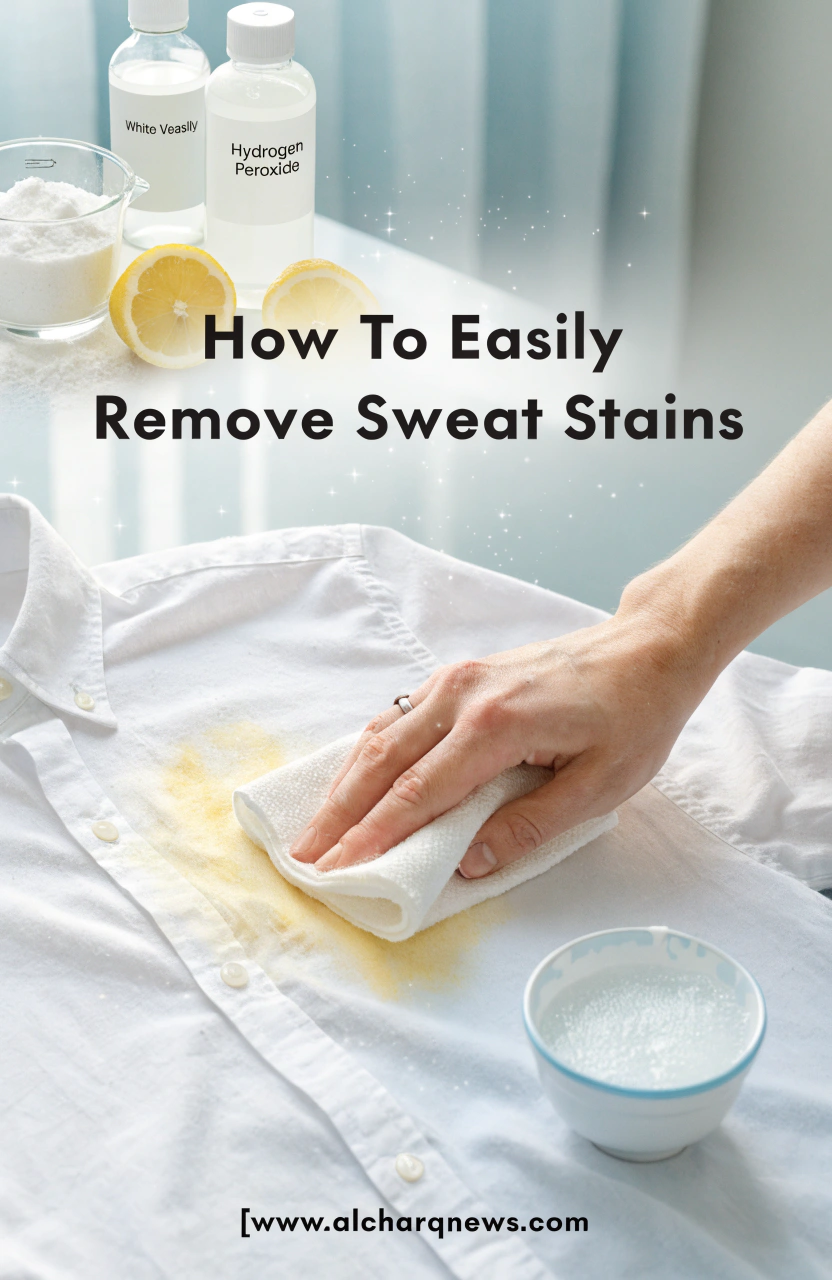
This guide on How To Easily Remove Sweat Stains walks you through practical, proven methods that actually work on fresh and stubborn stains alike.
What Causes Sweat Stains on Clothes?
Sweat stains aren’t caused by sweat alone. In most cases, they’re the result of a chemical reaction between sweat and deodorant ingredients.
Why sweat stains form:
- Sweat contains proteins and salts
- Many deodorants contain aluminum compounds
- When combined, they create yellow discoloration
- Heat from washing or drying can “set” the stain
Over time, repeated wear makes stains more visible and harder to remove.
Why Sweat Stains Are So Hard to Remove
Unlike surface dirt, sweat stains sink deep into fabric fibers.
Common reasons they persist:
- They bond with fabric over time
- Heat locks stains in during washing
- Regular detergent often isn’t strong enough
- Stains build up layer by layer
That’s why pre-treatment is usually more important than the wash itself.
Essential Ingredients for Removing Sweat Stains
Before jumping into methods, it helps to know what actually works on these stains.
Common household stain fighters:
- Baking soda
- White vinegar
- Hydrogen peroxide
- Lemon juice
- Dish soap
Each ingredient targets a different part of the stain—oil, odor, or discoloration.
Sweat Stain Removal Ingredients Guide
| Ingredient | Function | Benefit |
|---|---|---|
| Baking soda | Breaks down buildup | Lifts stains gently |
| Vinegar | Dissolves residue | Removes odor and buildup |
| Hydrogen peroxide | Oxidizing agent | Brightens yellow stains |
| Lemon juice | Natural bleaching | Freshens and lightens fabric |
| Dish soap | Grease remover | Breaks deodorant residue |
How To Easily Remove Sweat Stains (Step-by-Step Methods)
Below are the most effective ways to treat sweat stains using simple, accessible ingredients.
1. Baking Soda Paste Method
Baking soda is one of the most reliable options for sweat stains.
How to use it:
- Mix baking soda with a small amount of water
- Apply directly to stained areas
- Let it sit for 30–60 minutes
- Gently scrub and wash normally
It works well on both fresh and moderately set stains.
2. Vinegar Soak Treatment
White vinegar helps break down odor and residue trapped in fabric.
Steps:
- Mix equal parts vinegar and water
- Soak the stained clothing for 30 minutes
- Wash as usual
This method is especially useful for cotton shirts and sportswear.
3. Hydrogen Peroxide Whitening Method
Hydrogen peroxide is powerful for removing yellow underarm stains, especially on white clothing.
How to apply:
- Apply directly to the stain
- Let sit for 10–15 minutes
- Wash thoroughly afterward
Always test on a hidden area first to avoid fabric damage.
4. Lemon Juice Natural Brightening
Lemon juice works like a gentle natural bleach.
Best method:
- Apply lemon juice to the stain
- Place clothing in sunlight for added effect
- Wash after 30 minutes
Sunlight enhances the stain-lifting process.
5. Dish Soap Spot Treatment
Dish soap is effective against oily deodorant residue.
Steps:
- Apply a small amount directly to stain
- Rub gently with fingers or soft brush
- Let sit for 10–15 minutes
- Wash normally
This is a quick fix for newer stains.
6. Salt and Lemon Scrub Method
Salt acts as a mild abrasive while lemon helps brighten fabric.
How to use:
- Mix lemon juice with salt
- Scrub gently into stain
- Let sit before rinsing
Best for lightly stained cotton clothing.
7. Aspirin Solution Hack
Aspirin contains compounds that help break down sweat residue.
Method:
- Crush 2 aspirin tablets
- Mix with warm water
- Apply to stain for 30 minutes
A lesser-known but effective DIY trick.
8. Oxygen-Based Laundry Boosters
These are strong stain removers available in most stores.
Benefits:
- Deep fabric penetration
- Safe for most colors
- Effective on older stains
Ideal for laundry load pre-soaks.
9. Pre-Soaking for Old Stains
Older stains require more time to break down.
Method:
- Soak clothing in vinegar or oxygen cleaner
- Leave for several hours or overnight
- Wash normally
This improves success rate significantly.
10. Sun Drying for Natural Whitening
Sunlight acts as a natural stain booster.
Why it works:
UV rays help break down discoloration in fabric fibers.
Always air-dry after treatment for best results.
Step-by-Step Sweat Stain Removal Routine
Complete cleaning process:
- Identify stain type and fabric
- Choose a treatment method
- Apply pre-treatment
- Let it sit properly
- Gently scrub if needed
- Wash normally
- Air dry or sun dry
Consistency matters more than intensity.
Best Fabrics and How They React
Different fabrics respond differently to treatment.
Fabric behavior:
- Cotton: easiest to clean
- Polyester: traps deodorant residue
- Linen: responds well to natural cleaners
- Silk: requires gentle handling
- Wool: needs specialized care
Always check care labels before applying any treatment.
Common Mistakes When Removing Sweat Stains
Avoid these mistakes:
- Washing in hot water too soon
- Skipping pre-treatment
- Using too much detergent
- Drying before stain is removed
- Scrubbing delicate fabrics aggressively
These mistakes often make stains worse.
How to Prevent Sweat Stains in the Future
Prevention is often easier than removal.
Helpful tips:
- Use aluminum-free deodorant
- Let deodorant dry before dressing
- Wash sweaty clothes quickly
- Wear breathable fabrics
- Rotate clothing regularly
Small habits reduce buildup over time.
FAQ: How To Easily Remove Sweat Stains
What is the best way to remove sweat stains?
Baking soda, vinegar, and hydrogen peroxide are the most effective household solutions.
Can old sweat stains be removed?
Yes, but they may require soaking or multiple treatments.
Why do sweat stains turn yellow?
They form when sweat reacts with aluminum in deodorants.
Does baking soda really work on sweat stains?
Yes, it helps lift buildup and neutralize odor.
Can sweat stains be prevented?
Yes, with proper deodorant use and regular washing habits.
Final Thoughts
Sweat stains are frustrating, but they’re not permanent. Once you understand what causes them and how to treat them correctly, you can restore most garments without much effort.
With the techniques in How To Easily Remove Sweat Stains, you can keep your clothes looking cleaner, fresher, and longer-lasting.
Call-to-Action
Try one of these stain removal methods today on an old shirt you thought was ruined. You might be surprised how much cleaner it looks after just one treatment—and it could save you from replacing clothes you still love.