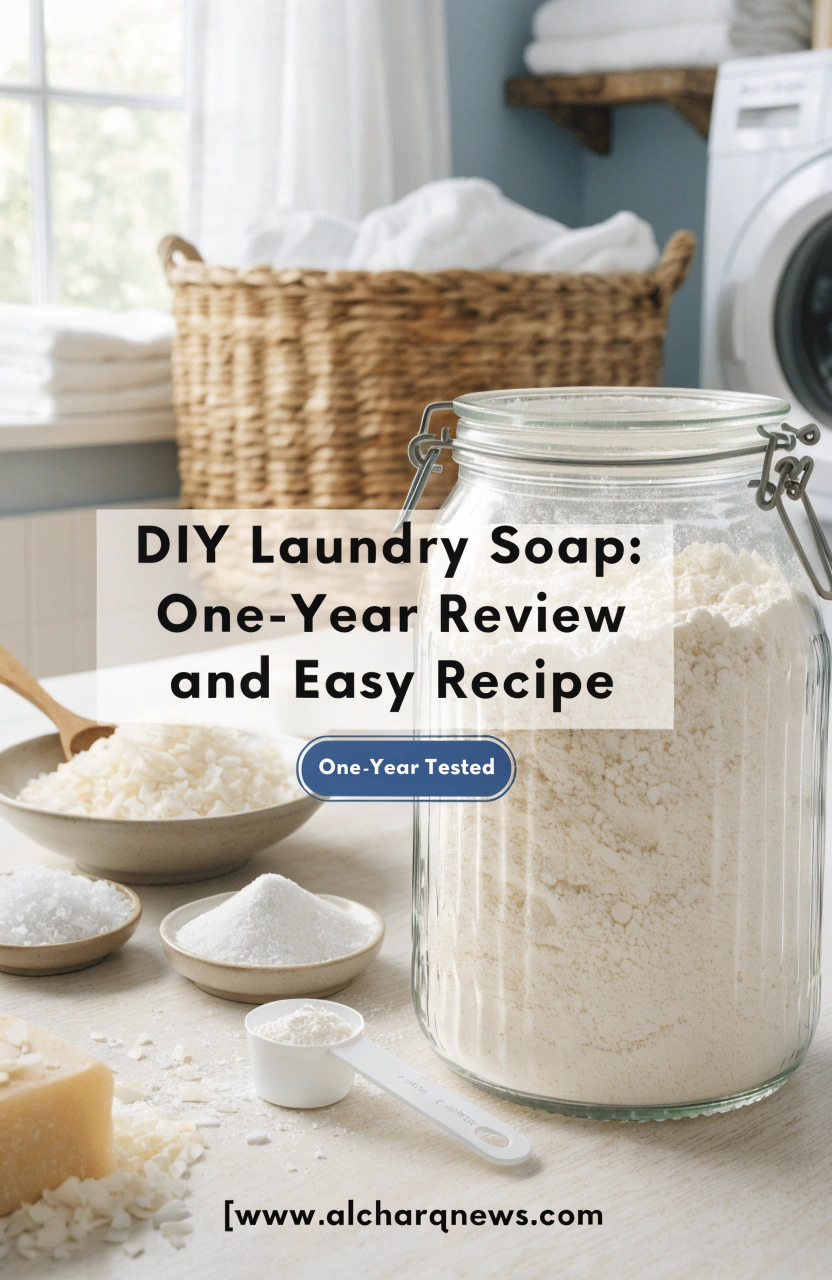
DIY Laundry Soap: One-Year Review and Easy Recipe – Is Homemade Detergent Worth It?
Laundry is one of those household chores that never takes a day off. Whether you’re washing clothes for a large family or simply keeping up with your weekly loads, laundry detergent is a constant expense. Over time, those bottles and pods can take a noticeable bite out of your budget.
A year ago, I decided to try making my own laundry soap. My goals were simple: spend less money, reduce unnecessary ingredients, and find out whether homemade detergent could truly keep clothes clean. Like many people considering DIY laundry soap, I had plenty of questions. Would my clothes smell fresh? Would stains come out? Would my washing machine handle it well?
After twelve months of testing, washing, and comparing results, I have a clear picture of what works and what doesn’t. This complete guide shares my experience, the recipe I used, the money saved, and tips to help you decide if homemade laundry soap is right for your home.
What Is DIY Laundry Soap?
DIY laundry soap is a homemade alternative to commercial detergent. It uses a combination of simple ingredients that work together to remove dirt, lift stains, and freshen fabrics.
Many households choose homemade laundry soap because it offers several advantages:
- Lower cost per load
- Simple ingredient list
- Reduced packaging waste
- Easy customization
- Ability to make large batches
While commercial detergents often contain dozens of ingredients, DIY laundry soap focuses on a few basic cleaning agents that have been used for generations.
Why I Switched to Homemade Laundry Soap
Like many families, I noticed grocery costs increasing steadily. Laundry detergent was one of those products that seemed inexpensive at first glance but added up significantly over a year.
I also wanted more control over the ingredients used in my home. Many commercial detergents contain fragrances and additives that aren’t necessary for everyday cleaning.
My expectations before starting were modest:
- Save money
- Maintain clean clothing
- Avoid strong fragrances
- Reduce household waste
I committed to using homemade laundry soap exclusively for one full year to get an honest assessment.
DIY Laundry Soap: One-Year Review Results
After twelve months of regular use, the results were surprisingly positive.
Overall Performance
| Category | Result |
|---|---|
| Cost Savings | Excellent |
| Everyday Cleaning | Very Good |
| Odor Control | Good |
| Fabric Freshness | Very Good |
| Ease of Use | Excellent |
| Overall Satisfaction | High |
The biggest surprise was how well the soap handled everyday laundry. T-shirts, jeans, bedding, towels, and children’s clothing all came out consistently clean.
Heavy stains still required pretreatment, but that’s often true even with commercial detergents.
Easy DIY Laundry Soap Recipe
One reason this recipe became my favorite is its simplicity. It requires only a few ingredients and takes very little time to prepare.
Ingredients
| Ingredient | Amount | Purpose |
|---|---|---|
| Washing soda | 1 cup | Boosts cleaning power |
| Borax | 1 cup | Helps remove stains and odors |
| Castile soap (grated) | 1 bar | Primary cleaning ingredient |
| Essential oils (optional) | 10–20 drops | Adds fragrance |
Equipment Needed
- Large mixing bowl
- Cheese grater
- Measuring cups
- Airtight storage container
Instructions
Step 1: Grate the Soap
Use a cheese grater to finely shred the Castile soap.
Step 2: Combine Ingredients
Mix the grated soap, washing soda, and borax thoroughly.
Step 3: Add Essential Oils
If desired, add your favorite essential oils for a light scent.
Step 4: Store Properly
Transfer the mixture to an airtight container and keep it in a dry location.
How Much to Use
| Load Size | Amount |
|---|---|
| Small Load | 1 tablespoon |
| Medium Load | 2 tablespoons |
| Large Load | 3 tablespoons |
A little goes a long way.
How Much Money Can You Save?
The savings were one of the biggest benefits of switching to DIY laundry soap.
Commercial detergents often cost significantly more per load than homemade alternatives. Depending on your household size, you may cut your laundry costs by 50% or more.
Example Cost Comparison
| Product Type | Estimated Annual Cost |
|---|---|
| Commercial Detergent | Higher |
| DIY Laundry Soap | Much Lower |
For households doing multiple loads every week, the yearly savings can be substantial.
How Homemade Laundry Soap Performed on Different Fabrics
Not all laundry is the same. Over the year, I tested homemade detergent on a variety of fabrics.
Everyday Clothing
T-shirts, jeans, and casual wear came out consistently clean and fresh.
Result: Excellent
Towels and Bedding
Towels remained absorbent and bedding felt clean after every wash.
Result: Very Good
Children’s Clothing
Daily dirt and minor stains washed out effectively.
Result: Very Good
Athletic Wear
This category was more challenging. Heavy sweat odors occasionally required pretreatment.
Result: Good
Delicate Fabrics
The gentle formula worked well for delicate garments.
Result: Good to Very Good
Pros and Cons of DIY Laundry Soap
After one year, I discovered both strengths and weaknesses.
Benefits
Lower Cost
The savings add up quickly, especially for larger households.
Simple Ingredients
You know exactly what goes into every batch.
Less Packaging Waste
Buying ingredients in bulk reduces plastic waste.
Easy to Make
The entire process takes less than 15 minutes.
Customizable
You can add essential oils or adjust ingredients to suit your preferences.
Drawbacks
Requires Preparation
Unlike store-bought detergent, you must make it yourself.
Heavy Stains Need Extra Attention
Grass stains, grease, and deeply set stains often require pretreatment.
Hard Water Challenges
Homes with hard water may need adjustments for best results.
Machine Considerations
Some washing machine manufacturers recommend specific detergents, so checking your owner’s manual is always wise.
Common DIY Laundry Soap Mistakes to Avoid
Several mistakes can affect performance.
Using Too Much Soap
More is not always better. Excess detergent may leave residue on clothing.
Poor Mixing
Uneven mixing can result in inconsistent cleaning power.
Ignoring Water Hardness
Hard water may require adjustments to maintain effectiveness.
Improper Storage
Always keep homemade laundry soap in a dry container to prevent clumping.
Tips for Better Results
If you want the best possible performance, consider these simple upgrades.
Add Vinegar During the Rinse Cycle
White vinegar helps soften fabrics naturally and reduces residue.
Pretreat Tough Stains
Apply a stain remover before washing heavily stained items.
Wash Promptly
Fresh stains are easier to remove than old ones.
Measure Carefully
Using the proper amount prevents buildup and improves cleaning performance.
Is DIY Laundry Soap Safe for HE Washers?
Many homeowners wonder whether homemade detergent is suitable for high-efficiency machines.
In most cases, low-sudsing DIY recipes can be used successfully in HE washers. However, you should always:
- Follow manufacturer recommendations
- Use the correct amount
- Monitor for residue buildup
- Perform occasional machine maintenance
Checking your washing machine manual is always a smart step.
Final Verdict: Is DIY Laundry Soap Worth It?
After a full year of testing, I can confidently say that homemade laundry soap exceeded my expectations.
It delivered reliable cleaning performance, reduced household expenses, and simplified my laundry routine. While it may not replace specialty detergents for every situation, it works exceptionally well for everyday washing needs.
If your goals include saving money, reducing waste, and controlling ingredients, DIY laundry soap is absolutely worth trying.
Frequently Asked Questions
Does DIY laundry soap really clean clothes?
Yes. Homemade laundry soap effectively cleans most everyday laundry when used correctly.
How much money can you save using DIY laundry soap?
Savings vary by household size, but many families spend significantly less compared to commercial detergents.
Is DIY laundry soap safe for HE washers?
Many users successfully use homemade detergent in HE machines, but checking manufacturer guidelines is recommended.
What is the best DIY laundry soap recipe?
A mixture of washing soda, borax, and grated Castile soap remains one of the most popular and effective recipes.
Can DIY laundry soap remove tough stains?
Yes, but heavily stained items often benefit from pretreatment before washing.
Conclusion
Making your own detergent may seem old-fashioned, but after one year of real-world testing, it proved to be a practical and budget-friendly solution. The recipe is simple, the ingredients are affordable, and the results are surprisingly effective.
If you’ve been curious about homemade laundry soap, there’s no better time to experiment with a small batch and see how it performs in your own home. You may discover that a simpler approach delivers exactly the results you’re looking for.
Have you tried DIY laundry soap before? Share your experience, favorite recipe variations, or laundry-saving tips in the comments. Your insights could help other readers decide whether homemade detergent is the right choice for their household.