Physical Address
304 North Cardinal St.
Dorchester Center, MA 02124
Physical Address
304 North Cardinal St.
Dorchester Center, MA 02124

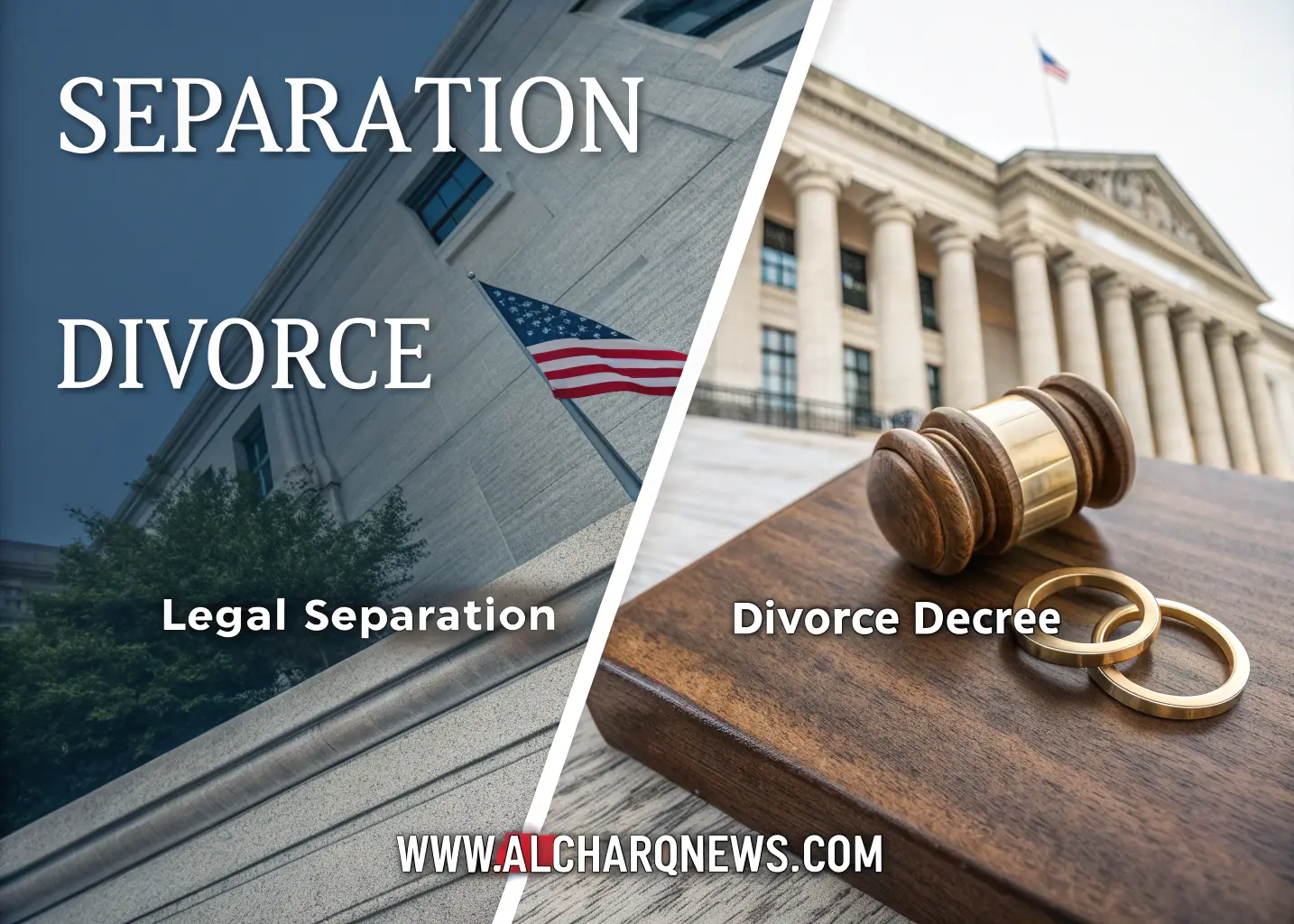
When a marriage begins to break down, you may find yourself standing at a crossroads. Do you step back temporarily, or do you end the relationship completely? For many couples, the decision between separation vs divorce in the United States is not simple. Emotions run high, finances are at stake, and children may be involved. Understanding the legal and practical differences can help you move forward with confidence rather than confusion.
This guide explains everything you need to know so you can choose the path that protects your future.
Legal separation is a court-recognized arrangement that allows you and your spouse to live apart without ending the marriage.
Many couples choose separation when they need distance but are not ready for a permanent break.
Not every state recognizes legal separation, so availability depends on where you live.
Divorce is the legal process that permanently ends a marriage. Once finalized, the marital relationship no longer exists in the eyes of the law.
Unlike separation, divorce brings closure and long-term certainty.
Understanding the distinction between separation vs divorce helps prevent costly mistakes.
| Feature | Legal Separation | Divorce |
|---|---|---|
| Marital status | Still married | Marriage terminated |
| Remarriage allowed | No | Yes |
| Court involvement | Yes | Yes |
| Property division | Temporary or partial | Final |
| Health insurance | Often continues | Usually ends |
| Emotional finality | Low | High |
While both involve court orders, only divorce completely dissolves the marriage.
Money is often one of the biggest concerns during marital transitions.
If long-term financial clarity is your priority, divorce usually provides more stability.
Children are protected by court orders in both separation and divorce.
In both cases, courts rely on the best interest of the child, considering safety, stability, and emotional well-being.
Legal separation can serve as a middle ground.
For many couples, separation offers breathing room without irreversible consequences.
In other situations, remaining legally tied can create ongoing conflict.
Divorce may be more appropriate if:
If reconciliation is unlikely, delaying divorce often increases stress and legal expenses.
No. Separation does not become divorce on its own.
You must file a separate divorce petition and complete all legal requirements. However, in some states, time spent separated can shorten the divorce waiting period.
Always verify your state’s rules before assuming timelines.
Family law varies significantly across the country.
Because laws differ, local legal guidance is strongly recommended.
Before choosing, ask yourself:
Your answers often point clearly toward the right solution.
No. Separation keeps you legally married, while divorce permanently ends the marriage.
Dating is usually legal but may affect custody or support decisions depending on your state.
Initially yes, but pursuing both processes often costs more long term.
Only if a court-approved agreement exists.
There is no universal answer. The best option depends on your goals, finances, and family situation.
The decision between separation vs divorce in the United States is deeply personal. Separation offers flexibility and time, while divorce provides finality and independence. Each option carries legal, emotional, and financial consequences that should not be taken lightly.
Before moving forward, take time to understand your rights, review your state laws, and consider professional guidance. The more informed you are, the stronger your decisions will be.
