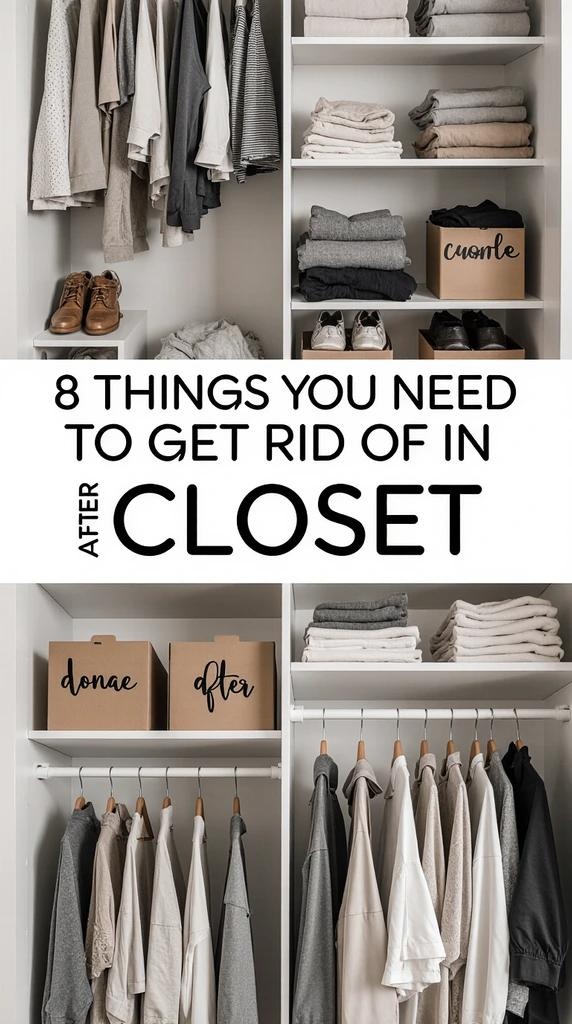
8 Things You Need To Get Rid Of In Your Closet: A Practical Guide to a Cleaner, Smarter Wardrobe
You open your closet expecting clarity, but instead you’re met with clutter—clothes you don’t wear, items that no longer fit your life, and pieces you keep “just in case.” It’s a small frustration, but it adds up every single morning when you’re trying to decide what to wear.
What you may not realize is that your closet isn’t just storage—it’s a reflection of your daily habits, decisions, and even your mindset. When it’s overcrowded, your mornings feel heavier than they should.
Learning 8 things you need to get rid of in your closet isn’t just about organizing clothes. It’s about simplifying your routine and making space for what actually works for you right now.
Why your closet affects your daily life more than you think
A cluttered wardrobe creates more than physical mess. It quietly influences your mood and decision-making.
When you have too many options, your brain works harder than necessary. This is called decision fatigue, and it’s why choosing an outfit can feel oddly exhausting.
What a cluttered closet does to you:
- Slows down your morning routine
- Creates constant “nothing to wear” feelings
- Makes it harder to define your personal style
- Increases stress without you noticing
When you simplify your closet, you simplify your thinking.
1. Clothes you haven’t worn in over a year
If you haven’t worn something in a full year, there’s usually a reason.
Maybe it doesn’t fit your current lifestyle. Maybe you forgot it exists. Or maybe you keep hoping you’ll “eventually” wear it.
The reality is simple: if it hasn’t been useful through multiple seasons, it’s probably just taking up space.
What to consider:
- Did you wear it through all four seasons?
- Does it match your current lifestyle?
- Would you buy it again today?
If the answer is no, it’s time to let it go.
2. Clothes that no longer fit your body
Your body changes over time, and your clothes should adapt with you—not hold you hostage to the past.
Keeping items that are too tight or too loose often leads to frustration when you try them on again.
Why you should remove them:
- They create unrealistic expectations
- They discourage you from getting dressed
- They take up valuable space
Your wardrobe should support who you are now, not who you were years ago.
3. Damaged or worn-out clothing
That shirt with the stubborn stain or jeans with a frayed hem might feel “usable,” but in reality, they lower the overall quality of your closet.
Signs it’s time to remove an item:
- Permanent stains that won’t fade
- Holes or fabric thinning
- Broken zippers or missing parts
If you haven’t repaired it already, chances are you won’t. Keeping it only adds visual clutter.
4. Duplicate items you don’t actually need
Having a few basics is smart—but having five nearly identical black shirts or multiple similar jeans doesn’t improve your wardrobe.
Instead, it creates confusion.
What to do instead:
- Keep your best-fitting version
- Choose quality over quantity
- Focus on variety, not repetition
A smaller, well-chosen collection is easier to manage and wear.
5. Trend-based clothes you no longer like
Fashion trends move fast. What felt exciting two years ago may now feel disconnected from your current style.
Questions to ask yourself:
- Would you buy this again today?
- Does it still reflect your personality?
- Do you feel confident wearing it now?
If not, it’s just occupying space that could be used for pieces you actually enjoy.
6. Uncomfortable clothing you avoid wearing
If something is itchy, tight, stiff, or simply uncomfortable, you will naturally avoid it.
That means it becomes dead space in your closet.
Common examples:
- Shoes that hurt your feet
- Tight waistbands you constantly adjust
- Fabrics that irritate your skin
Comfort directly affects how often you wear something. If it’s not comfortable, it’s not functional.
7. Clothes saved for “special occasions” that never come
Many people keep outfits waiting for a perfect moment—weddings, parties, or future events that may never arrive.
But life doesn’t always follow that schedule.
Why letting go helps:
- You stop postponing enjoyment
- You make space for everyday style
- You reduce emotional clutter
Dressing well shouldn’t require a special occasion.
8. Gifts or sentimental items you never wear
Clothes given as gifts often carry emotional weight, making them harder to remove.
But there’s a difference between memory and storage.
Important reminder:
- The memory stays with you, not the clothing
- Keeping unused items doesn’t honor the gesture more
- Wearing what you love shows more appreciation for your style
Letting go doesn’t erase meaning—it simply clears space for what fits your life now.
Simple ingredients for an organized closet system
| Item | Purpose |
|---|---|
| Storage bins | Seasonal separation |
| Quality hangers | Better clothing structure |
| Donation bags | Easy removal process |
| Labels | Clear categorization |
How to decide what stays in your closet
If you’re struggling to make decisions, use a simple mindset shift.
Ask yourself these three questions:
- Have I worn this in the past 12 months?
- Does it fit my current lifestyle?
- Would I choose this again today?
If you hesitate too long on any of these, that’s your answer.
What changes after you declutter your closet
Once you remove the unnecessary items, the difference is immediate.
You’ll notice:
- Faster outfit decisions in the morning
- A clearer sense of personal style
- Less frustration when getting dressed
- A more visually calming space
A clean closet creates a calmer routine.
Common mistakes to avoid when decluttering
Many people try to organize but end up keeping too much.
Avoid:
- Holding onto items “just in case”
- Replacing clutter with more shopping
- Overthinking every single item
- Doing it in small, incomplete steps
Commit to finishing the process fully for real results.
FAQ: 8 Things You Need To Get Rid Of In Your Closet
Why is it so hard to get rid of clothes?
Because you attach memories, emotions, or future expectations to them—even when they’re no longer useful.
How often should you declutter your closet?
At least twice a year, ideally with seasonal changes.
What should I do with clothes I remove?
Donate, recycle, or repurpose them instead of storing them again.
How do I stop my closet from getting cluttered again?
Follow a simple rule: if a new item comes in, one old item should go out.
Final thoughts
Your closet should make your life easier, not more complicated. When you identify the 8 things you need to get rid of in your closet, you’re not just cleaning space—you’re improving your daily routine, your confidence, and your clarity.
A smaller, more intentional wardrobe doesn’t limit you. It actually gives you more freedom.
Call to action
Open your closet today and remove just one category from this list. Start small, but be consistent. Once you feel the difference in your space and your mindset, you’ll be motivated to keep going until your closet finally works for you—not against you.