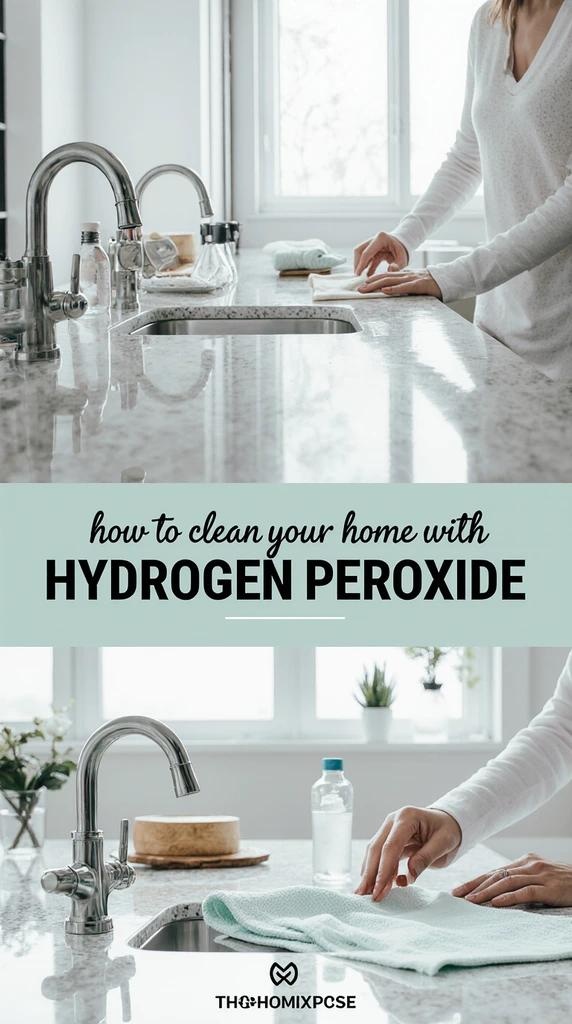
How to clean your home with hydrogen peroxide: A simple, powerful way to refresh every room naturally
You’ve probably walked through your home at the end of a long day and noticed small things piling up—stains in the kitchen, a dull smell in the bathroom, fingerprints on glass, and that general feeling that things need a reset. Most people reach for multiple cleaning products, each for a different job, and still don’t feel completely satisfied with the result.
What if one simple solution already sitting in your home could handle most of it?
Understanding how to clean your home with hydrogen peroxide gives you a practical way to simplify your routine, cut down on harsh chemicals, and still achieve a noticeably fresher living space. It works quietly, but effectively, across almost every room.
Why hydrogen peroxide works so well for home cleaning
Hydrogen peroxide is a mild compound made of hydrogen and oxygen. When it comes into contact with organic material like bacteria, dirt, or stains, it breaks down and releases oxygen. That reaction is what makes it such a useful cleaning agent.
Instead of masking odors or spreading grime around, it actually breaks down the source of the problem.
What makes it useful in your home:
- Helps remove bacteria from surfaces
- Breaks down stains instead of covering them
- Leaves no harmful residue after use
- Works as a deodorizer in multiple spaces
Because it turns into water and oxygen after reacting, it’s often considered a cleaner, simpler alternative to stronger chemical disinfectants.
Safety before you start cleaning with hydrogen peroxide
Before you start using it everywhere, a few simple precautions will help you avoid damage and get better results.
Key safety rules:
- Stick to 3% hydrogen peroxide for household use
- Never mix it with bleach or vinegar in the same container
- Avoid prolonged exposure to natural stone surfaces like marble
- Store it in a dark bottle away from sunlight and heat
Surfaces you should be careful with:
- Marble and granite countertops
- Unsealed wood
- Colored fabrics (test first to avoid bleaching)
A small test spot always saves you from bigger problems later.
How to clean your kitchen with hydrogen peroxide
Your kitchen is one of the most important places to keep clean because it directly connects to food preparation. Hydrogen peroxide helps reduce bacteria while also handling grease and stains.
Countertops and food prep areas
You can spray hydrogen peroxide directly on countertops after cooking. Let it sit for a few minutes before wiping. This helps reduce bacteria buildup from raw ingredients and daily use.
Cutting boards
Cutting boards often hold hidden bacteria inside knife grooves. A quick soak or spray helps break down those residues and refresh the surface.
Sink cleaning
Kitchen sinks collect food particles and odors over time. Hydrogen peroxide helps neutralize smells while breaking down buildup.
Ingredients table for kitchen cleaning solution
| Ingredient | Purpose |
|---|---|
| Hydrogen Peroxide | Disinfection |
| Warm Water | Safe dilution |
| Baking Soda | Deep stain lifting |
How to clean your bathroom with hydrogen peroxide
Bathrooms are naturally humid, which makes them a common place for mold and bacteria growth. Hydrogen peroxide helps manage both without harsh fumes.
Toilet bowl cleaning
Pour hydrogen peroxide into the bowl and let it sit for 10–15 minutes. Then scrub. This helps reduce stains and bacterial buildup.
Shower tiles and grout
Spray directly onto grout lines and corners. It helps break down mildew and dark spots caused by moisture.
Bathroom sink and fixtures
Wiping sinks and taps with hydrogen peroxide helps remove buildup and restore shine without strong chemical smells.
Laundry cleaning with hydrogen peroxide
Instead of relying only on bleach or strong detergents, hydrogen peroxide gives you a gentler way to handle stains and odors.
Whitening clothes
It helps brighten white fabrics without the harsh effects of chlorine bleach.
Removing stains
It works well on fresh stains like sweat, wine, or blood when applied quickly.
Neutralizing odors
It helps eliminate bacteria trapped in fabrics, reducing unpleasant smells.
Ingredients table for laundry cleaning boost
| Ingredient | Purpose |
|---|---|
| Hydrogen Peroxide | Whitening + disinfecting |
| Baking Soda | Odor removal |
| Laundry Detergent | Cleaning base |
Cleaning living areas with hydrogen peroxide
Beyond kitchens and bathrooms, hydrogen peroxide is useful in common living spaces where odors and stains often appear.
Carpet spot treatment
It helps lift small stains and reduce pet odors when applied carefully to affected areas.
Trash bins
Spraying inside trash bins helps neutralize odor-causing bacteria.
Glass and mirrors
When wiped properly, it leaves glass surfaces clean and streak-free.
Food-safe cleaning uses you can trust
Hydrogen peroxide can also be used in areas related to food preparation when handled correctly.
Fruit and vegetable rinse
A diluted solution helps remove surface residues from produce before washing.
Dishwasher refresh
Running a cleaning cycle with hydrogen peroxide helps reduce buildup and odors inside the machine.
Ingredients table for produce wash solution
| Ingredient | Purpose |
|---|---|
| Hydrogen Peroxide | Surface cleaning |
| Water | Safe dilution |
Smart tips to improve cleaning results
If you want better performance from hydrogen peroxide, how you use it matters as much as where you use it.
Practical tips:
- Always use fresh solution for stronger effect
- Let it sit on surfaces before wiping
- Combine with baking soda for tough stains
- Use in small amounts for controlled cleaning
Small adjustments often lead to noticeably better results.
Common mistakes to avoid
Even a simple cleaning product can be misused if you’re not careful.
Avoid:
- Mixing it with bleach or vinegar
- Using it on natural stone surfaces without testing
- Overusing on fabrics that may bleach
- Skipping contact time before wiping
These mistakes reduce effectiveness or can damage surfaces.
FAQ: How to clean your home with hydrogen peroxide
Can you use hydrogen peroxide every day for cleaning?
Yes, you can use it regularly on most household surfaces when properly diluted.
Does hydrogen peroxide really disinfect surfaces?
Yes, it helps reduce bacteria and certain viruses through oxidation.
Is it safe for kitchen food areas?
Yes, when used correctly and rinsed if needed, it is commonly used for food-safe cleaning.
Can it replace other cleaners?
In many cases, yes. It can replace several single-purpose cleaners in your routine.
Final thoughts
Learning how to clean your home with hydrogen peroxide gives you a practical, low-cost way to simplify everyday cleaning. Instead of juggling multiple sprays and solutions, you can rely on one versatile ingredient that handles stains, odors, and bacteria across different rooms.
When used correctly, it helps you maintain a cleaner, fresher home with less effort and fewer harsh chemicals.
Call to action
Try using hydrogen peroxide in just one area of your home today—your kitchen sink, bathroom tiles, or laundry—and notice the difference it makes. Once you see the results, you can start building a simpler, more efficient cleaning routine around it.